by Zary Fekete
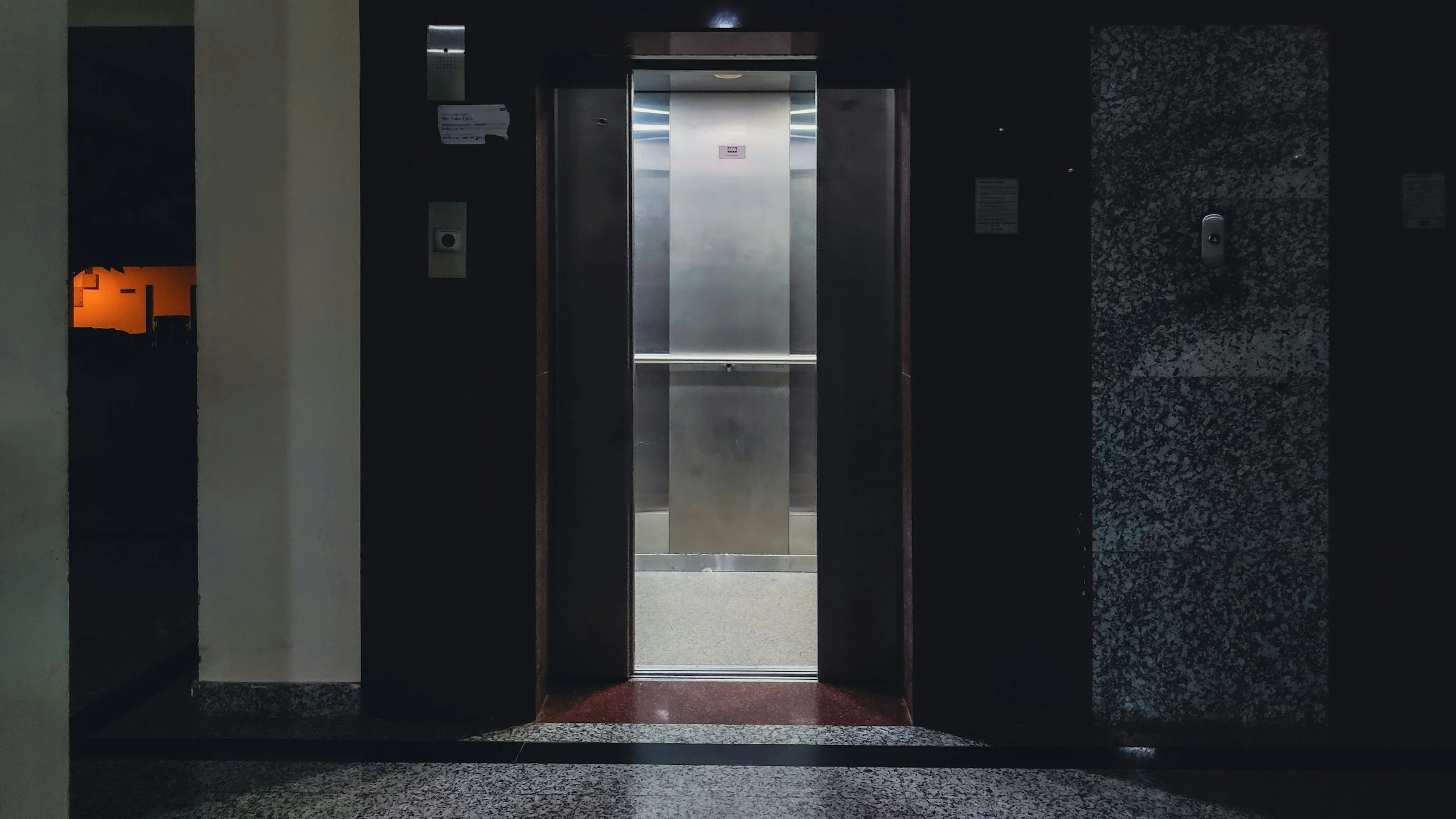
Each time the elevator bell chimes on the seventh floor, I hold my breath and pray the door will open to an empty hall.
Most mornings it does. The small metal compartment slides open, I step inside, press the button marked with a white kanji for ground floor, and descend in quiet perfection. But on the mornings when someone else is waiting, my nervous system flares into instant, panicked service.
A checklist fires automatically inside my mind:
-Smile.
-Stand politely to the side.
-Murmur a greeting.
-Wait with poise.
In Minnesota, I could always scramble to hide my interior ruin behind a barrage of pleasantries. I could comment on the snow or the sun or offer a self-deprecating laugh, throwing out scraps of agreeable noise like chum to distract a predator. I wanted every stranger to walk away believing I was the kindest person they had encountered all day. Or, failing that, I wanted them to forget I had ever crossed their path at all.
Here in Tokyo, no one asks for chum. The elevator door rolls back, and it is Mrs. Sato from 701. She steps into the car with a tidy canvas tote bag.
Japan is a kingdom of polite introversion, a place where people master the art of looking directly ahead without seeing you, giving you the courtesy of your own private universe. In theory, it is heaven for an anxious man. But in reality, the silence only makes me louder.
I am blond, pale, and unmistakably foreign. I cannot simply dissolve into the background. In an American elevator, two people can look at their phones and pretend to be busy. Here, the silence is deliberate, holy, and dense. By stepping into the car, I have dragged an enormous, noisy presence into her quiet morning.
My checklist begins to unravel in my head. Did I murmur my ohayou gozaimasu with enough deference, or did it sound gruff and demanding? Am I standing too close to the control panel? If I shift my weight from one foot to the other, the rubber sole of my shoe squeaks against the linoleum flooring like a startled animal, and I want to tear my skin off.
I look at the polished stainless steel of the door. In the reflection, I can see her standing a foot behind my right shoulder, her hands folded neatly over her purse, staring patiently at the glowing red arrows descending through the numbers: 6, 5, 4.
Years ago, I would not have had to suffer through this floor-by-floor descent. I would have started the day with two ounces of vodka before the coffee even finished brewing. I called that one Morning. Then came Elevator, and then Unexpected Socializing, until every human friction was coated in a soft, numbing lacquer. Later, when the bottles were banned from my life, I took to clutching an empty pill box in my pocket, fingering the plastic hinge just to trick my brain.
The elevator reaches 1 with a gentle chime. The doors slide open. I press my arm against the doorframe to hold it wide, bowing slightly so she can step out first. She gives me a quick, formal nod and whispers a tiny arigatou gozaimasu as she passes.
She walks toward the lobby glass without looking back. She will forget me before she crosses the street. Yet my heart hammers against my ribs, convinced she has seen straight through to the bottom of the empty box.
Zary Fekete grew up in Hungary and currently lives in Tokyo. He has a debut novella (Words on the Page) out with DarkWinter Lit Press and a short story collection (The Written Path: A Journey Through Sobriety and Scripture) out with Creative Texts. He enjoys books, podcasts, and many many many films. Twitter and Instagram: @ZaryFekete Bluesky:zaryfekete.bsky.social
