by Pompilian Tofilescu
As if from an unseen pipe, the night fell around him in coils, growing thicker and thicker, but it smelled of wolves, and he did not like it. He put on his VR glasses and programmed in the smell of rotten apples. The night scattered as if by magic and he broke against the glassy air of a November morning.
Falling from above, a few drops of water burst against his head, soaking him. He did not like the sound—like that of a living crow’s beak striking a dead horse’s skull (or was it the other way around, he wondered)—and he cursed; the drops were not part of the program.
“Damn it, it’s broken again,” he said, taking off his glasses.
The drops kept falling, and in front of him an identical version of himself stared back, eyes swollen—where had he been last night, he wondered—then, this is impossible, he told himself, surprised that the realization did not trouble him; he leaned against something, the sink gave way, as he fell he caught hold of something else that did not break, so he pulled himself up, opened the door and stormed out of the bathroom.
I was in the bathroom, he noted as he opened the window, then shouted, marveling at the number of commas he was about to use:
“Eight-fifteen, shut the damn water off, you idiots!”
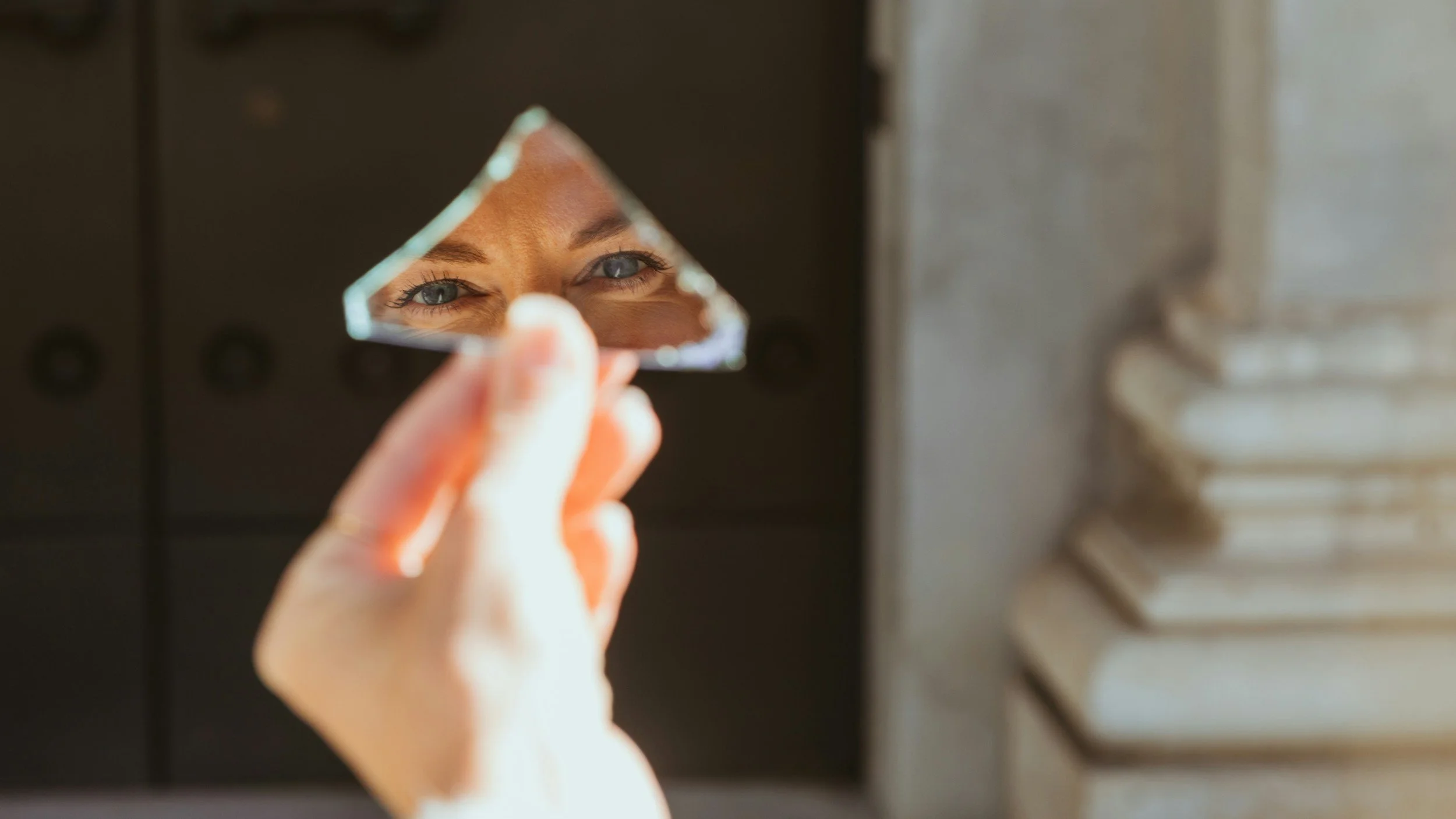
He went back into the bathroom and, under the drops that kept falling, set the sink back in place, wiped away the traces of the damage and, as he washed, noticed that from in front of him an identical version of himself was staring back, only one eye swollen, because where the other should have been the mirror was broken.
He realized he was trying to wake up and couldn’t. It struck him as absurd that he should be asleep; he, a plastic man who, on a plastic street, among other plastic people, was walking, on a November morning that smelled strongly of rotten apples, a flesh-and-blood dog that belonged to a March night reeking of wolves.
*
“Since when do you smoke?”
The sense of psychological discomfort did not have time to fully set in, for he caught it at once and realized that something had gone wrong in the circuitry. He should have been thinking: he, a flesh-and-blood man who, on a flesh-and-blood street, among other flesh-and-blood people, was walking, on a November morning that smelled strongly of rotten apples, a plastic dog that belonged to a March night reeking of wolves.
“Since when do you smoke?”
He noticed with surprise that he had not achieved very much. He corrected another error—the street became plastic and the dog flesh—and everything seemed in order.
Then he remembered that he had taken off his VR glasses, that around him there should have been—smelling of wolves, falling as if from an unseen pipe—a March night. I’ve completely lost it, he heard himself say; around him the air and the light were becoming more and more glassy.
“Since when do you smoke?” he heard the question for the third time, and to his left he saw an old woman just about to open her mouth for the fourth time.
“Since I was eighteen,” he replied, and angrily flung away the almost full cigarette that had gone out. He cursed under his breath; they weren’t even worth ten a pack.
He wondered how long he had been standing here, delirious, waiting for some unlikely truck to supply the shop with some equally unlikely goods. He couldn’t remember; that stupid dream from last night must be to blame, he told himself, and looked around.
The line stretched far, disappearing around the corner of the shop. Behind him, a consumptive was coughing his lungs out in coins of blood onto the dirty pavement. I have a son-in-law who used to smoke and was thin, now he’s quit and he’s fat, the old woman to his left insisted. To his right, an unshaven face split open and, through blackened stumps of teeth, a yellowed tongue threw a few words at him that he did not understand.
“Judge not, that ye be not judged; and with what measure ye mete, it shall be measured to you,” he replied to the old woman on his left.
In the gray sky, a bird was tearing with difficulty through the wall of cold above. His torn shoes kneaded the mud nervously. She is a lonely bird, I am a lonely man, he said, not caring that the poet had said it otherwise.
Suddenly, the dance of glances came to an abrupt halt—his eyes fell into hers, fixed on him from a little farther ahead. A strange warmth rose within him from some hidden place. He wanted to shout, I am no longer a lonely man. He reached out his hand,
“How shameless,” someone said,
but he no longer heard…
*
…a sharp smell of wolves strikes him—it is night—his fingers meet other fingers searching impatiently, he grasps them, pulls them toward himself, now they search for each other with their whole bodies until their lips meet as if by chance.
Now he likes the smell of wolves; it no longer matters that the leaves and the moon above are made of plastic—where is the dog, he catches himself wondering—the question irritates him and he brushes it away like a fly, their mouths now fused together, he feels himself beginning to melt and flow into her, now they are both a single bird—or a single man—he floats and wishes everything would remain like this, motionless, like in a painting, a still life petrified on the dark wall of a medieval castle.
Suddenly she tears herself from the embrace, presses a key, the darkness vanishes, the smell of wolves vanishes too, the park and the moon vanish as well; everything had been simulated, he thinks; only a diffuse light remains, as if coming from nowhere, because he cannot see any luminous object in the room—if this is a room—he sees only her, her eyes silently pleading, and he hears her say: hurry, it is our first and last night of love (hmm, did I pick up a virus somehow, he wonders, the file name in the “g” folder under Greene seemed to be different).
The light slowly fades; the two of them surge forward as if floating… the last thing he perceives is her trembling smile, that strange warmth inside him growing, and he wants to shout again, I am no longer a lonely man—he will go mad if he does not—but instead he finds himself beginning to speak softly about how the gods had gathered all evils into a box, and how the last of them to come out, when Pandora opened the box entrusted to her keeping, was hope.
And she, a little ahead of him, goes on smiling timidly, “that isn’t true, it is good to hope, it gives you wings,” and he, “no, those wings are made of wax,” and the consumptive keeps coughing his lungs out in coins of blood onto the pavement, and the bird keeps struggling against the wall of cold above.
*
He thinks he should have invited her too, but he no longer has time to remember where; a violent nausea grips his guts, he staggers toward the shop door, pushes his way out and, in front of the people who step aside in indignation, he vomits, watching in astonishment as from his stomach burst, all mixed together, coins of blood, strands of hair, feathers, wolf claws, the remains of a flesh-and-blood dog, a pair of glasses, mud…
“What’s wrong with you, are you sick?” someone is shaking him hard by the shoulders— he finds himself in his room, in one hand he holds the bag of groceries, in the other, picked up at the entrance, an envelope smelling sharply of wolves, he already knows what is written inside it: it is our first and last night of love, it is good to hope, it gives you wings (no, definitely not a virus!), from somewhere above drops of water burst against his head as if it were raining crow beaks onto corpses, he no longer knows whether he has taken off his VR glasses or not, but that no longer matters, because he rushes to the window and shouts—he feels he will go mad if he does not—marveling at the number of commas he is about to use:
“Eight-fifteen, shut the damn water off, you idiots…”
Pompilian Tofilescu is a Romanian born writer currently living in the USA. He has published short stories, poetry and essays in Romania and abroad. He won the Romanian National Science Fiction Short Story Award in 1994 and, more recently, he was a semifinalist at the Writers of the Future contest.
